Casting your vote for the first time is a significant milestone. It marks your entry into the democratic process and gives you a direct role in electing your government. While the idea of voting may feel straightforward, the experience can be unfamiliar if you have never done it before. From registration to queuing up at the polling booth, each step follows a structured process. This guide explains what you can expect.
Basics of Voting
Voting allows eligible citizens to choose their representatives in elections conducted at national, state, and local levels. These elections are organised and overseen by the Election Commission of India, which ensures that the process is fair, transparent, and accessible.
As a first-time voter, you are participating in a system that is designed to include every eligible individual. Knowing the basics will make the process smoother and more meaningful.
Checking Your Eligibility
To vote, you must be at least 18 years old and a citizen of the country. Eligibility is calculated based on a qualifying date set before elections.
But being eligible is not enough on its own. Your name must appear on the electoral roll of your constituency. This is the official list of voters.
You can check your status online through official portals or visit a local election office. It is advisable to do this well before election day to avoid last-minute issues.
Registering as a Voter
Registration can be completed online or offline. You will need to fill out the required form and provide proof of identity, age, and address.
Once submitted, your details are verified by officials. After successful verification, your name is added to the electoral roll.
You will then receive a voter ID card, which serves as a convenient form of identification. Even if you do not have this card, other approved identity documents can be used at the polling station.
Preparing for Election Day
Finding Your Polling Station
Each voter is assigned a specific polling station based on their address. The location is mentioned on your voter slip or can be checked online.
Polling stations are usually set up in nearby schools, community centres, or public buildings to ensure easy access.
What to Carry
On election day, you should carry:
- Your voter ID card or an approved identity document
- Your voter slip if available
Carrying the correct documents helps speed up the verification process.
What Happens at the Polling Booth
A step-by-step process begins once you reach the polling booth:
- At the polling station, voters are guided into queues. Separate arrangements may be made for senior citizens and persons with disabilities.
- Polling officials will check your name on the electoral roll and verify your identity using your ID.
- Once verified, your finger will be marked with indelible ink. This is a standard practice to ensure that each person votes only once.
- After casting your vote, you can leave the polling station. There is no further action required on the same day.
Casting Your Vote
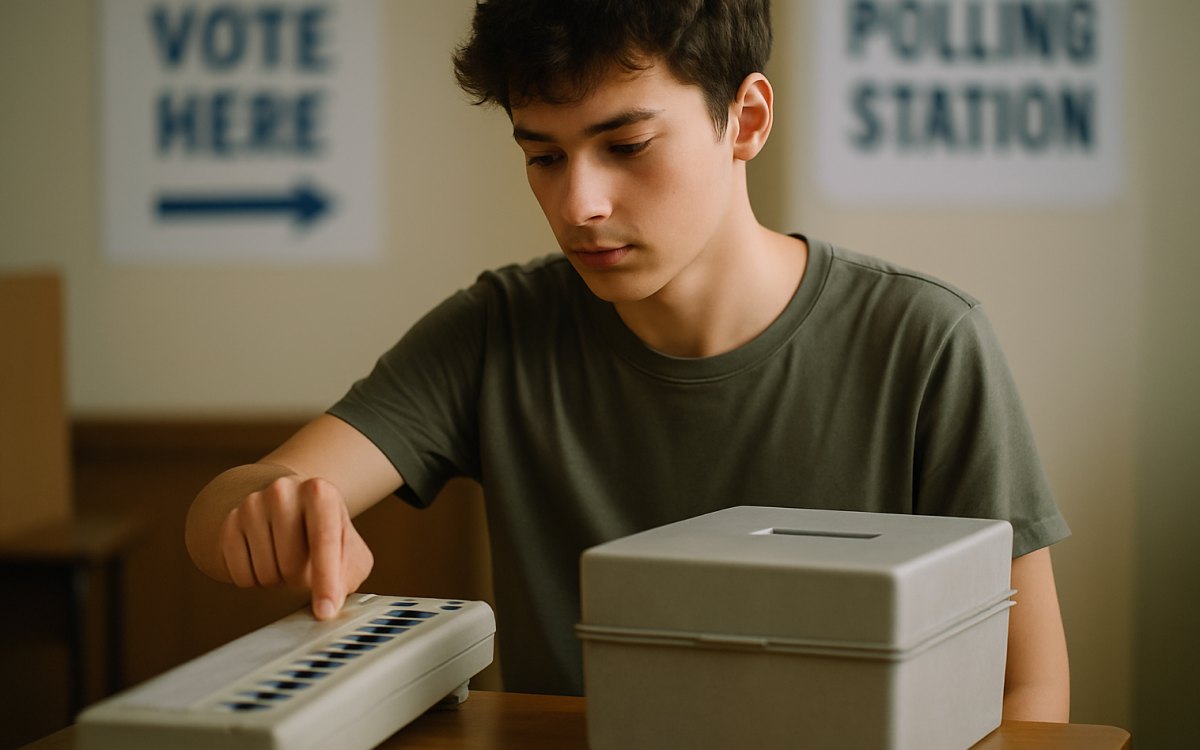
Voting is carried out using Electronic Voting Machines, commonly referred to as EVMs. The process is designed to be simple and quick, even for first-time voters.
- You will be directed to the voting compartment.
- The ballot unit will display candidate names and symbols.
- Press the button next to your chosen candidate.
- A light indicator and a beep confirm that your vote has been recorded.
Many polling stations also use the Voter Verifiable Paper Audit Trail system, known as VVPAT. After you press the button on the EVM, a small paper slip appears in a transparent window. This slip shows the name and symbol of the candidate you selected. The slip is visible for a few seconds before it is stored securely. This allows you to verify your vote without handling the paper.
After polling ends, the machines are sealed in the presence of officials and observers. This ensures that the recorded votes remain secure. The sealed machines are transported to secure storage locations and guarded until counting day.
Votes are counted at designated centres under strict supervision. The results are then officially announced.
Behaviour and Guidelines at the Polling Station
Maintaining Order
Polling stations follow strict rules to ensure a smooth process. You are expected to follow instructions given by officials and security personnel.
Restrictions
Certain activities are not allowed inside or near polling stations, such as using mobile phones in the voting area or displaying campaign material.
Respecting the Process
Voting is conducted in a confidential manner. You must cast your vote privately without influence or interference.
Common Concerns for First-Time Voters
Feeling Nervous
It is completely normal to feel unsure before voting for the first time. The process is straightforward, and officials are present to guide you.
Making Mistakes
EVMs are designed to prevent errors. Once a vote is cast, it cannot be changed, so take a moment to confirm your choice before pressing the button.
Queues
Queues can vary depending on the time of day. Planning your visit wisely can help minimise waiting time.
Tips for a Smooth First Voting Experience
Being prepared can make the experience stress-free and efficient.
- Check your name on the electoral roll in advance.
- Visit early or during less crowded hours.
- Carry the required identification.
- Follow instructions given at the polling station.
- Stay calm and take your time while voting.
Your first voting experience is both simple and memorable. From verifying your registration to pressing the button on the EVM, each step is designed to be clear and accessible. By understanding the process in advance, you can avoid confusion and feel more confident on election day. With proper preparation and awareness, voting becomes not just a responsibility but a straightforward and well-organised experience that you can take part in with ease.