Access to the electoral process is often associated with carrying a voter identification card, but questions still arise about whether it is absolutely necessary to vote. Situations such as misplaced cards, delays in issuance, or lack of awareness can create uncertainty. It is therefore useful to understand what alternatives exist, how identity is verified, and what conditions must be met. Clarity on these aspects helps ensure that participation in the democratic process is not disrupted due to documentation concerns.
The Role of a Voter ID Card
A voter identification card is generally issued as proof of registration in the electoral roll. It serves as a convenient document that confirms both identity and eligibility at the polling station. This card is commonly used because it is standardised and widely recognised. It simplifies the verification process and reduces confusion during polling. However, its presence is not the sole factor that determines whether participation is allowed.
Eligibility is primarily based on inclusion in the electoral roll. The card acts as supporting proof, rather than being the only requirement. This distinction is often overlooked, leading to unnecessary concern among individuals who may not possess the card at a given time.
Is Voting Possible Without the Card?
Participation is not strictly denied in the absence of a voter identification card. What matters more is whether the individual’s name appears on the official electoral roll for the assigned polling station. If the name is listed, identity can still be verified using alternative documents that are accepted for this purpose. These documents are notified in advance and are considered valid substitutes. This approach ensures that individuals are not excluded solely due to the absence of a specific card. It reflects a system designed to prioritise eligibility over documentation format, while still maintaining verification standards.
Importance of the Electoral Roll
The electoral roll plays a central role in determining eligibility. It is a comprehensive list of individuals who are authorised to participate in the process. Presence on this list is essential. Even if a voter identification card is available, participation may not be permitted if the name is missing from the roll. Conversely, inclusion in the roll allows participation even without the card, provided identity can be confirmed. This makes it important for individuals to verify their details in advance. Accuracy in the roll helps avoid confusion at the polling station and ensures a smoother experience.
The Alternatives for Identification
In situations where a voter identification card is not available, several other documents may be accepted for identity verification. These are typically government-issued documents that include a photograph and basic personal details. Examples may include:
- Passport
- Driving licence
- Aadhaar card
- PAN card
- Service identity cards issued by recognised organisations
- Bank or post office passbooks with photographs
These documents are considered reliable because they are issued after verification processes. Their acceptance helps ensure that individuals are not restricted by the absence of a single document. It is important to carry the original version of the document, as photocopies may not always be accepted for verification purposes.
Why the System Allows Alternatives
The allowance of alternative identity documents reflects an effort to make the process more inclusive. Not everyone may have access to a voter identification card at all times, and relying solely on one document could exclude eligible participants.
By accepting multiple forms of identification, the system ensures flexibility while maintaining verification standards. This balance is essential for both accessibility and integrity. The approach also recognises practical challenges such as lost cards, delays in issuance, or relocation. It ensures that such situations do not prevent participation.
Verification at the Polling Station
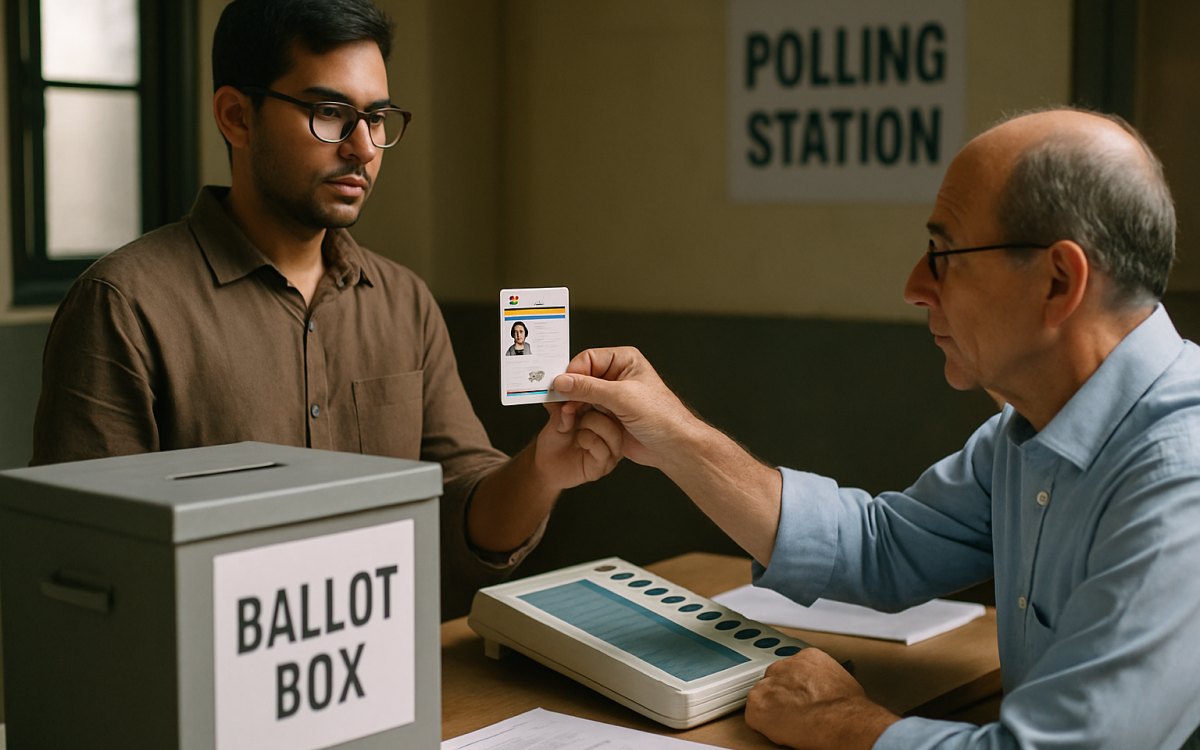
At the polling station, identity verification is conducted before participation is allowed. Officials are responsible for ensuring that each individual matches the details listed in the electoral roll. When a voter identification card is presented, the process is straightforward. In its absence, alternative documents are checked carefully. The verification process is designed to be thorough but efficient. Once identity is confirmed and the name is found on the roll, participation is allowed without further complications. This structured approach helps maintain accuracy while also ensuring that eligible individuals are not turned away unnecessarily.
Situations Where Challenges May Arise
Although alternatives are available, certain situations may still create difficulties. For instance, mismatched details between the electoral roll and the identity document can lead to delays. Differences in spelling, age, or address may require additional verification. Another challenge may arise if the individual is unaware of the accepted documents and arrives without any valid proof. In such cases, participation may not be permitted, even if the name is listed. These situations highlight the importance of preparation and awareness. Carrying appropriate documents and verifying details in advance can help avoid such issues.
Steps to Take Before Visiting the Polling Station
Preparation plays a key role in ensuring a smooth experience. It is advisable to confirm that the name appears correctly on the electoral roll. This can usually be done through official portals or local verification methods. Carrying at least one valid identity document is essential, especially if the voter identification card is unavailable. Keeping documents ready helps reduce delays and ensures a more efficient verification process. Understanding the location of the polling station and the assigned constituency also contributes to a smoother experience. These steps may seem simple, but they help eliminate uncertainty and ensure that participation is not hindered.
Common Misconceptions About Voting Without a Card
Several misunderstandings exist regarding the necessity of a voter identification card. One common belief is that participation is not possible without the card. As explained earlier, this is not accurate, provided the individual is listed on the electoral roll and can present valid identification. Another misconception is that any document can be used for verification. In reality, only specific documents are accepted, and these are usually predefined. There is also confusion about whether digital copies are sufficient. In most cases, original documents are preferred for verification. Clarifying these misconceptions helps reduce confusion and ensures better preparedness.
Conclusion
The process has been structured to ensure that eligibility is not restricted by the absence of a single document. While a voter identification card is useful and widely accepted, it is not the only way to establish identity. Inclusion in the electoral roll remains the most important factor. Alternative documents provide flexibility and ensure that eligible individuals can still take part without unnecessary barriers. With proper preparation and awareness, participation can be completed smoothly even without the card. The system is designed to support access while maintaining accuracy, making it possible for individuals to engage confidently in the process.