General elections are among the world’s largest democratic exercises, in which citizens elect representatives of the Lok Sabha. The process is understood through its structured steps, from preparation to results. This guide details each phase for clarity.
Constitutional Framework
General elections are conducted under Article 83 of the Constitution, which mandates a Lok Sabha term of five years unless dissolved earlier. The President issues a notification to call elections when the term ends or a vacancy arises. The entire electoral machinery is thereby activated.
The Lok Sabha is composed of 543 constituencies, with one member elected from each through adult suffrage. Voters cast ballots in their designated constituencies, which the Delimitation Commission determines based on the latest census population data. This arrangement ensures balanced representation across states and Union territories.
Role of the Election Commission
The process is overseen by the Election Commission of India (ECI), an independent body established in 1950. The structure includes Chief Electoral Officers in states, District Election Officers, Returning Officers per constituency, and Presiding Officers at polling stations. These officials manage logistics for over 990 million voters.
The ECI announces the election schedule, usually 4-6 weeks in advance, with phases, nomination deadlines, and polling dates specified. Recent elections, for example, were spread over seven phases to address security and scale. Updates are provided on the ECI website or app.
Voter Eligibility and Registration
Eligibility to vote is granted to citizens aged 18 or above on July 1 of the revision year, provided ordinary residence in the constituency is maintained. Registration for overseas citizens is completed using Form 6A. Disqualifications are applied to those convicted of specific crimes or declared unsound of mind.
Registration is facilitated online via the Voters’ Services Portal (VSP) or through Booth Level Officers (BLOs), who conduct door-to-door verifications during special summary revisions before elections. An Elector’s Photo Identity Card (EPIC) is issued to voters and contains a photo, name, and constituency details. Processes are simplified by Aadhaar linkage, while anonymity in voting is preserved.
Electoral rolls are kept open for claims and objections until finalisation. Duplicate registrations across locations are prevented. Participation exceeded 64 crore voters in 2024.
Delimitation of Constituencies
Boundaries are redrawn by the Delimitation Commission every decade following a census to reflect population changes. Single-member territorial constituencies are established, with 84 reserved for the Scheduled Castes and 47 for the Scheduled Tribes, where applicable. General seats cover the remainder.
Changes were frozen by a 2002 amendment until after 2026, by which time the urban-rural balance is maintained. Polling stations are located within 2 km of residences to minimise travel.
Nomination Process
Political parties or independents file nominations after public notice. Form 2A is submitted for general seats or Form 2B for reserved ones to the Returning Officer, accompanied by a security deposit of Rs 25,000 (Rs 12,500 for SC/ST). Endorsement by ten proposers from the constituency is required.
Assets, liabilities, education, and criminal cases are disclosed in affidavits. ECI conducts
scrutiny on a fixed day, with invalid papers rejected. Objections to false details are permitted. Withdrawals occur before the final list is published, often with 10-20 candidates per seat.
Campaign Period
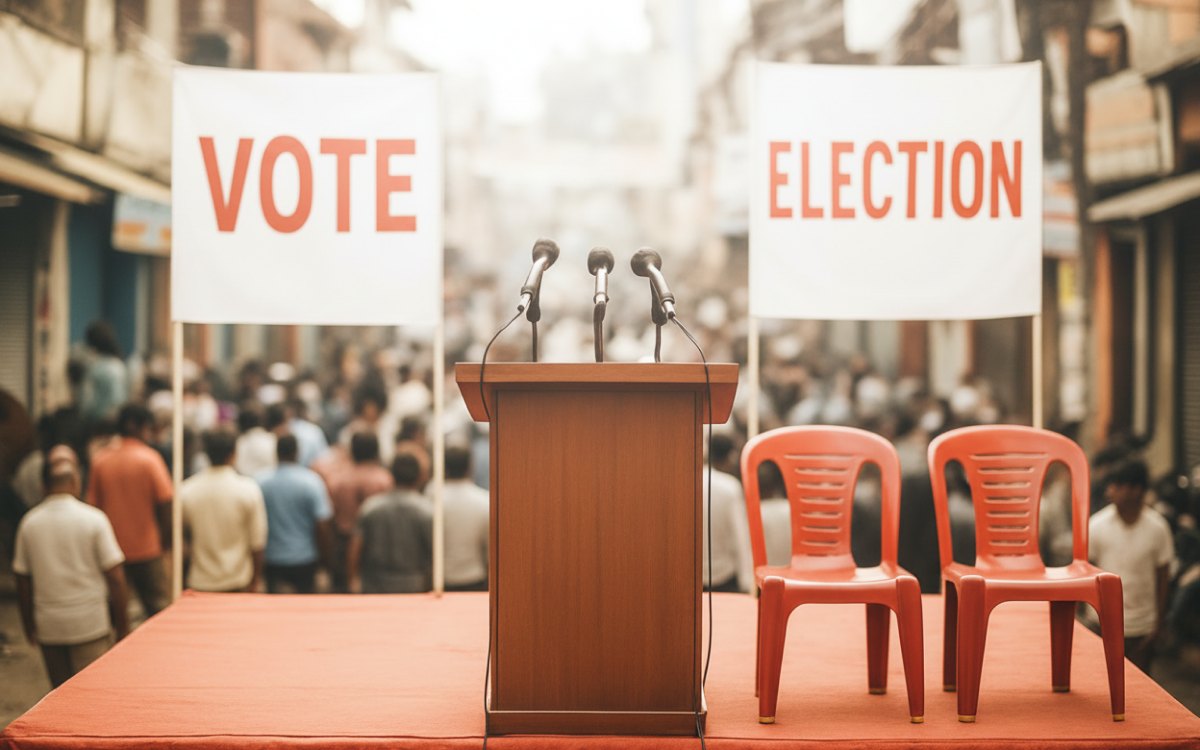
A 2-4 week campaign phase commences after nominations close. Parties use symbols recognised by the ECI; independents select options from available choices. Rallies, posters, and media ads are regulated under the Model Code of Conduct (MCC), which prohibits new schemes, caste-based appeals, or hate speech.
Expenditure is capped at Rs 95 lakh per Lok Sabha candidate. Spending is monitored by ECI teams, with reports submitted via the CVIGIL app. Campaigns are halted 48 hours before polling during a silence period for voter reflection.
Polling Day Logistics
Polling is held on scheduled dates, often phased across regions for security reasons. Stations operate from 7 AM to 6 PM, with queues processed beyond closing time if required. Locations are identified via SMS (EPIC last 4 digits + state + constituency to 9212318281) or the ECI app.
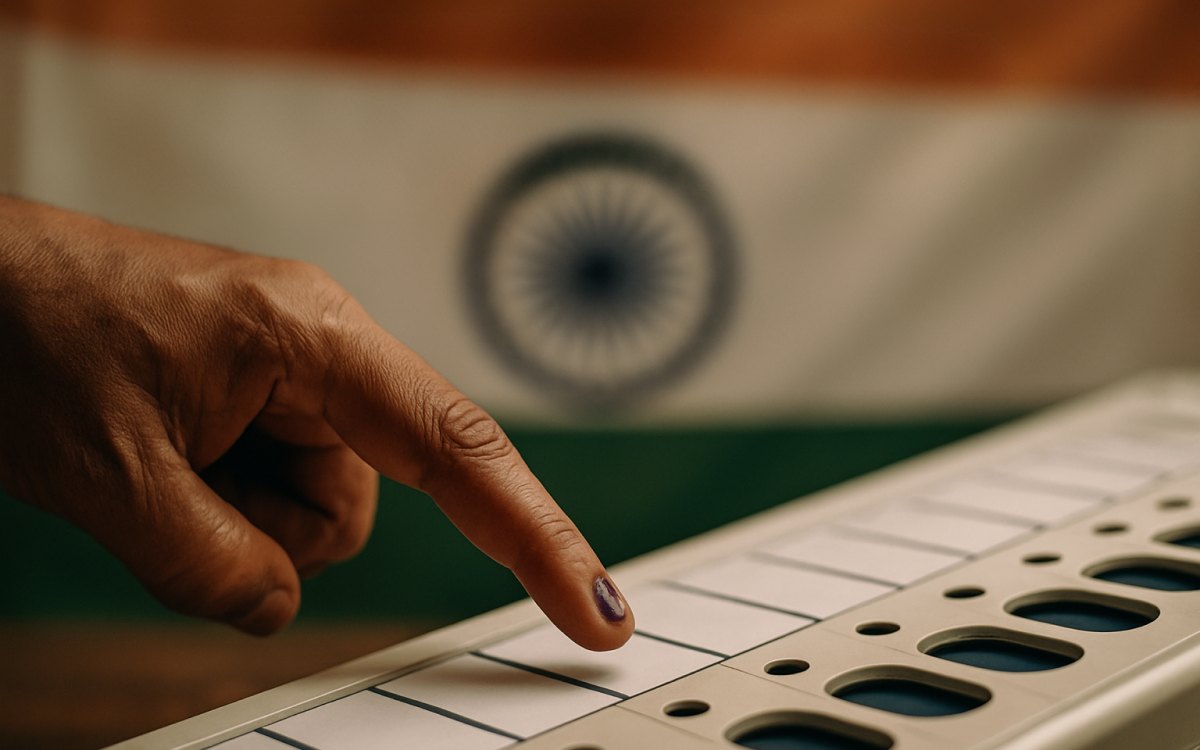
The EPIC is presented by voters for verification against the register or EVM. Selection is made in the booth by pressing the candidate’s symbol on the Electronic Voting Machine (EVM). Confirmation is provided by a Voter Verifiable Paper Audit Trail (VVPAT) slip, visible for 7 seconds before deposit. Phones are prohibited inside.
Ramps, wheelchairs, and Braille EVMs are provided for disabled voters. Home postal ballots are offered to those aged 85 or older or with disabilities. Service personnel use proxy or electronic transmission.
Sensitive booths are secured by the Central Armed Police Forces, with webcasting employed for oversight. Over 10.6 lakh stations were utilised in 2024.
Counting and Results
EVMs are sealed and transported to strong rooms under CCTV surveillance. Counting is initiated constituency-wise from 6 AM on the designated date. Live coverage is broadcast on ECI platforms and television.
The Returning Officer tallies votes; winners are determined by plurality (first-past-the-post), without a majority required. Verification of VVPAT slips is conducted on 5 random machines per constituency. Trends are reported first, followed by final results.
ECI declares outcomes within hours. Elected members take oaths within weeks. A party or coalition needs a majority of 272 seats; otherwise, the largest group is invited by the President.
Post-Election Steps
The new Lok Sabha is convened within two months, followed by the election of the Speaker. By-elections are triggered for vacancies from mid-term dissolutions. Processes are audited by ECI, with court petitions allowed within 45 days.
The Lok Sabha serves a five-year term until the next cycle. Representatives are tracked via parliamentary portals.
Ensuring Fairness and Accessibility
ECI deploys observers, flying squads, and video teams to prevent malpractices such as booth capturing or inducements. Reports are directed to toll-free 1950. NOTA enables rejection of all candidates.
Digital tools like NVSP streamline registration; 98% panchayat coverage extends to remote areas. Pink slips are issued to women with priority in the queue in select states. Proxy ballots are used overseas.
Voter Turnout Trends
Turnout in recent polls was recorded at 65-70%, with peaks in Kerala and lower rates in urban areas. Numbers are increased by youth additions in the 18-19 age group via linkage. Engagement is sustained through volunteering and awareness efforts.
Democracy is demonstrated through widespread participation in general elections. Knowledge of these steps fosters informed citizenship.