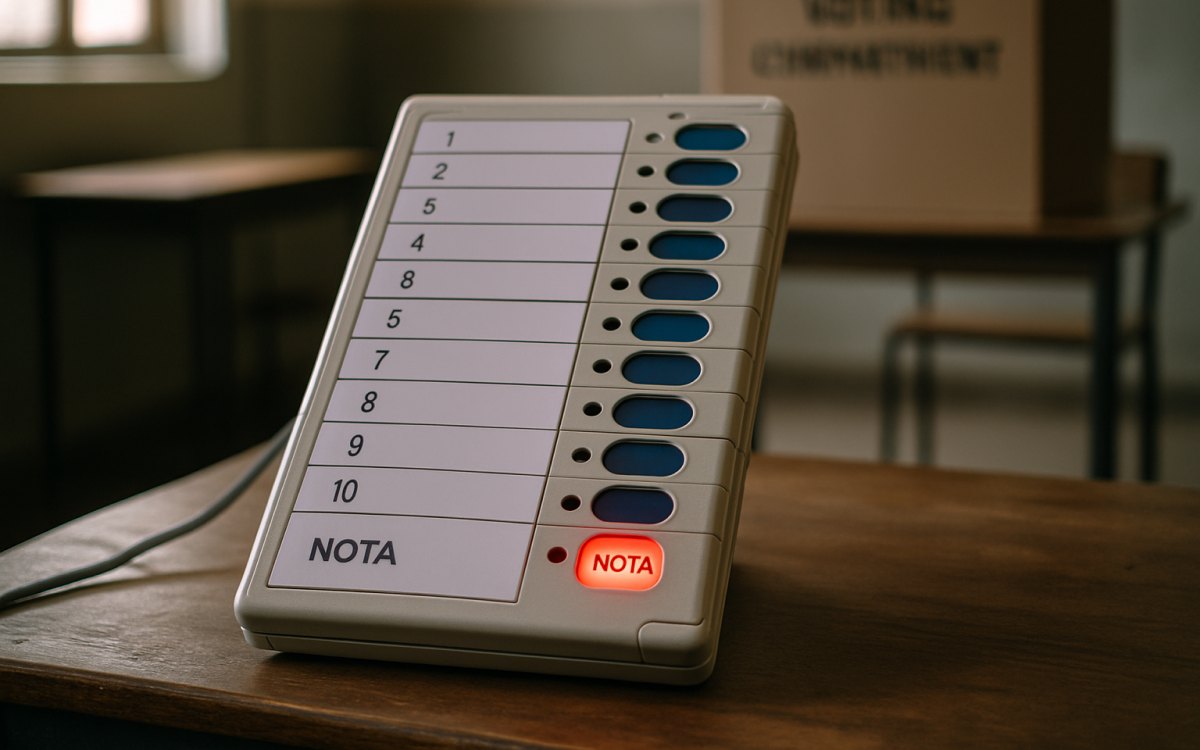
Many people want to take part in elections, but do not always feel convinced by the names on the ballot. NOTA, short for “None Of The Above”, offers a way to vote while clearly saying that none of the listed candidates feels suitable. It is a simple button or option on the voting machine or ballot that records a formal choice of rejection. By using it, a voter participates in the process while sending a clear, recorded signal.
Meaning Of NOTA In Simple Terms
NOTA stands for “None Of The Above”, and it appears as one of the choices alongside the candidates. It allows a person to cast a valid vote without selecting any candidate. Instead of staying away from the polling booth, a voter can use this option when none of the contestants seem acceptable. This keeps the person part of the democratic process. A vote counted as NOTA is different from an invalid or wrongly marked ballot.
Why NOTA Exists As An Option
Many voters sometimes feel that no candidate reflects their expectations or values. Earlier, the only way to express that feeling was either not to turn up to vote or to spoil the ballot paper. Both actions could easily be ignored or misread. NOTA provides a clearer and more transparent way to express dissatisfaction.
When a person presses the NOTA button, that choice is recorded and counted separately. This encourages people to still come out and vote even when they do not support any candidate on the list. It can help reduce apathy and show real levels of satisfaction or dissatisfaction with the options.
How NOTA Works During Voting
At the polling station, NOTA appears as the last option on the voting machine or ballot paper. A voter who wishes to reject all candidates simply selects NOTA instead of choosing a name. The machine records this as a distinct choice, just like any other vote.
These votes are then tallied and reported in the final results. They are not treated as invalid; they are part of the total vote count. However, NOTA does not select a winner, and the candidate with the most regular votes is still declared elected.
Difference Between NOTA And Not Voting
Some people think staying home delivers the same message as pressing the NOTA option, but the two actions are not the same. If a person does not vote, there is no official record of why they stayed away. It could be due to disinterest, lack of time, travel, or dissatisfaction with candidates; nothing is documented.
When someone uses NOTA, their disapproval becomes a documented part of the election data. The vote is counted and visible. It clearly shows that the person chose to participate, yet found no candidate worthy of a positive vote.
What Happens When NOTA Gets Many Votes
A common question is what happens if NOTA receives a large share of the vote. In most systems, even when NOTA secures more votes than any single candidate, it does not cancel the election result. The candidate with the most votes among the actual contestants still wins.
That means NOTA is mainly a tool for expression rather than a trigger for re-election. A high NOTA count, however, sends a strong signal that a significant number of voters are unhappy with the available choices. Political actors and observers often study these numbers to understand the public mood.
Benefits Of Having A NOTA Option
- NOTA offers several practical advantages for voters and for the wider system.
- It gives every person a way to vote, even when they are unhappy with all the candidates.
- It reduces the pressure to pick the “lesser evil” and instead allows an honest choice.
Another benefit is that it makes the overall turnout data more meaningful. People who might have stayed away can now participate and still express disapproval. This can encourage healthier engagement and show where there is room for better candidates in the future.
Limits And Misconceptions About NOTA
Despite its usefulness, NOTA also has limits that are important to understand. It does not cancel or redo an election, even if it receives a large share of the vote. Some people expect that a high NOTA count should force a fresh poll with new candidates, but that is usually not how the rules are written.
There is also a common misconception that a NOTA vote is wasted. In reality, it is counted and visible in official data. The vote does not go to any candidate, but it still carries information about voter sentiment. When many people choose NOTA, it can influence discussions around candidate selection and party strategies.
When A Voter Might Consider Choosing NOTA
A person might consider using NOTA in various situations. For example, they might feel that none of the candidates meet basic standards of performance or integrity. They might be disappointed with the quality of debate or promises made during the campaign. In such cases, NOTA offers a way to participate without supporting any name.
On the other hand, some voters may prefer to choose the candidate they think is relatively better, even if not perfect. Both approaches are valid ways to vote. The key is that the person makes a conscious, informed decision rather than avoiding the process.
How To Make An Informed Choice About NOTA
Before deciding whether to select NOTA, it can help to gather basic information about the candidates. Reading manifestos, checking past performance, and understanding local issues can give useful context. After that, a voter can weigh whether any candidate deserves support.
If none seems suitable, choosing NOTA is a legitimate way to record that view while still casting a vote. Over time, consistent and thoughtful use of this option can highlight the demand for better choices. It keeps the focus on accountability and quality, while ensuring that every person has a simple, dignified way to express their stand in the voting booth.