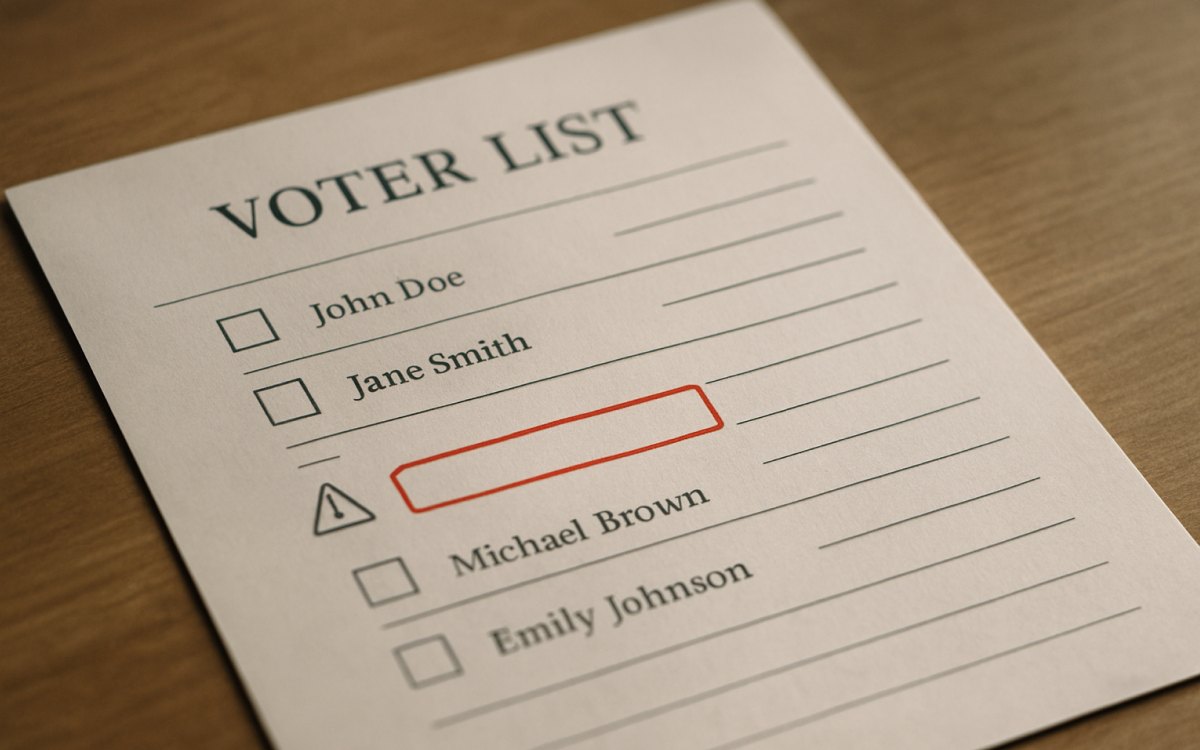
Voting is a fundamental part of civic participation, yet many individuals discover at the last moment that their name is not included in the voter list. This situation can feel frustrating and confusing, especially when you are prepared to cast your vote. However, there are clear procedures and remedies available to address the issue. By following the correct steps and staying informed, you can resolve the problem efficiently and ensure your eligibility to participate in the electoral process.
Why Names May Be Missing from the Voter List
Several factors can lead to a name being absent from the electoral roll. Administrative variations can sometimes occur during data entry or verification stages, which may affect how details appear on the voter list. In some cases, incomplete or incorrect information submitted during registration may result in rejection.
Relocation is another frequent cause. When individuals move to a new residence and fail to update their address, their details may either remain in the previous constituency or be removed altogether. Duplicate entries can also lead to deletion, as authorities periodically clean records to maintain accuracy.
Additionally, failure to respond to verification notices or not completing required documentation can result in removal from the list. Being aware of these reasons helps in identifying the appropriate corrective step.
Checking Your Name on the Electoral Roll
Before taking any action, it is essential to confirm whether your name is actually missing. Electoral rolls are typically accessible through official online portals as well as designated local offices.
Searching can be done using details such as name, age, and area of residence. It is advisable to verify all variations of your name, especially if spelling inconsistencies exist. Sometimes, entries appear under slightly different formats, which may lead to confusion.
Offline verification is also possible by visiting authorised centres where electoral lists are displayed. This step ensures that any action taken is based on accurate information rather than assumptions.
Steps to Take If Your Name Is Not Found
Once confirmed that your name is not present, the next step is to initiate the appropriate application process. Electoral systems provide specific forms for inclusion, correction, or transfer of entries.
Filling out the correct form is crucial. Details such as full name, address, and identification information must match supporting documents. Any discrepancy may delay the process or result in rejection.
After submission, applications undergo verification. Officials may conduct field checks or request additional documents. Keeping track of the application status helps ensure that no required step is missed.
Applying for Inclusion in the Voter List
Choosing the Right Form
Different situations require different forms. New applicants who have never been registered need to apply for fresh inclusion. Those who have shifted residence must use a form designed for address change.
Ensuring the correct selection prevents delays and reduces the chances of rejection. Guidance is often available through official portals or local offices to help applicants choose appropriately.
Providing Accurate Information
Every detail entered must be precise and consistent with official records. Spelling errors, incorrect dates, or mismatched addresses can create complications during verification.
Supporting documents such as proof of identity and residence play a vital role. Submitting clear and valid copies strengthens the application and speeds up processing.
Correcting Errors in Existing Entries
Sometimes, the issue is not complete absence but incorrect information in the voter list. Errors in name, age, or address can affect eligibility at the time of voting.
Correction forms are available for such cases. These allow individuals to update specific details without submitting a fresh application. The process generally involves providing documentary evidence to support the requested change.
Timely correction ensures that records remain accurate and avoids complications during elections.
Transferring Your Registration to a New Location
Relocation requires updating your electoral details to reflect the new address. Without this step, your name may remain linked to the previous constituency, making it difficult to vote in your current area.
Transfer applications involve submitting both the old and new address details. Once approved, the name is removed from the earlier roll and added to the new one.
Completing this process well in advance is important to avoid last-minute issues.
Tracking Application Status
After submitting an application, monitoring its progress is essential. Most electoral systems provide tracking facilities through reference numbers issued at the time of submission.
Checking status regularly helps identify if any additional action is required. In some cases, authorities may request clarification or further documents. Responding promptly ensures that the process continues without interruption.
Keeping a record of the application number and acknowledgement receipt is helpful for future reference.
What to Do If the Issue Persists
If your name remains missing despite applying, there are escalation mechanisms available. Approaching local electoral officers is often the first step in resolving unresolved issues.
Providing proof of application submission and supporting documents can assist officials in reviewing the case. In certain situations, grievance redressal systems are available for further escalation.
Maintaining a calm and systematic approach increases the likelihood of a satisfactory resolution.
Importance of Timely Verification
Regularly checking your status on the voter list is one of the simplest ways to avoid complications. Waiting until the final stages may limit available options for correction.
Verification should ideally be done whenever there is a change in residence or personal details. This proactive approach ensures that records remain accurate and up to date.
Taking early action reduces stress and ensures that you are prepared to vote without any obstacles.
Documents Commonly Required
Applications for inclusion, correction, or transfer usually require standard documentation. Proof of identity is essential, often supported by documents that establish age and citizenship.
Proof of residence confirms the applicant’s address and is particularly important for new registrations or transfers. Acceptable documents typically include utility bills, rental agreements, or official identification with address details.
Ensuring that all documents are valid and up to date helps streamline the verification process.
Avoiding Common Mistakes
Errors during application are a major reason for delays or rejection. Incomplete forms, missing signatures, or incorrect attachments can hinder progress.
Double-checking all details before submission is a simple yet effective step. Paying attention to instructions and guidelines provided with the forms can prevent unnecessary complications.
Consistency across all submitted information is key to a smooth process.
Role of Electoral Authorities
Electoral authorities are responsible for maintaining accurate and updated voter lists. Their role includes verifying applications, conducting field checks, and ensuring that records reflect genuine and eligible voters.
They also provide support through help centres, online platforms, and local offices. Engaging with these resources can make the process clearer and more efficient.
Respecting procedures and providing accurate information supports the overall integrity of the electoral system.
Final Thoughts on Ensuring Your Right to Vote
Missing from the voter list does not mean losing the opportunity to vote permanently. Clear procedures exist to address such situations, and following them carefully can resolve the issue effectively. From verifying your name to submitting the correct application and tracking its progress, each step plays a role in restoring your eligibility. Staying informed, organised, and proactive ensures that you can participate confidently in the electoral process without unnecessary hurdles.